EMPowering results across complement-experienced and -naïve patients1

In C5i-experienced patients
In complement inhibitor–naïve patients
Long-term data

EMPAVELI was studied head-to-head vs a C5 inhibitor (C5i) (eculizumab)
in C5i-experienced patients1,2

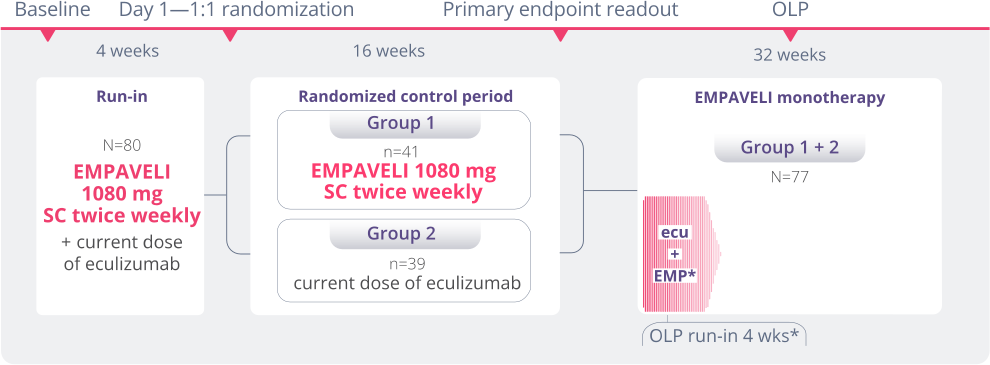
PEGASUS was a randomized 1:1, open-label, Phase 3 trial of 80 adults with PNH.1

PEGASUS Study Design

All patients who completed the 48-week period were eligible to enroll in a separate long-term extension study.1 Patients who did not enter the long-term extension were followed for 12 additional weeks.3

Select inclusion criteria1
  • Adults ≥18 years of age with PNH on stable dose of eculizumab for ≥3
months
  • Low Hb (Hb levels
<10.5 g/dL)
Primary endpoint1,4
  • Change in Hb levels from baseline to Week 16 vs eculizumab
Key secondary endpoints4
  • Transfusion avoidance
  • Change in ARC, LDH, and FACIT-Fatigue score from baseline to Week 16 vs eculizumab
Select secondary endpoints and additional analyses3,4
  • Normalization of Hb
  • Normalization of ARC
  • Normalization of LDH
  • Safety analyses

*Patients randomized to the eculizumab arm during the 16-week controlled period continued to receive eculizumab in addition to EMPAVELI for the first 4 weeks of the open-label period.1

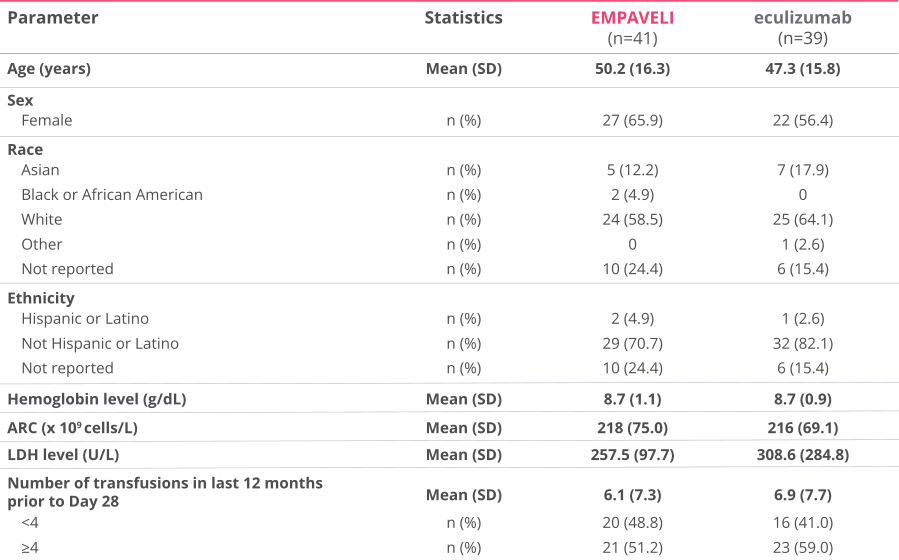
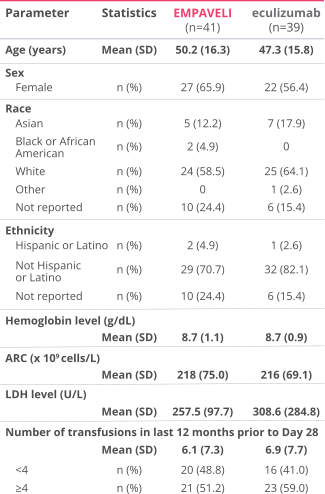
Patient baseline demographics and characteristics in PEGASUS1

Patients included in PEGASUS had varying transfusion history (<4 or ≥4 transfusions in prior year).1

EMPAVELI was studied in complement inhibitor–naïve patients1

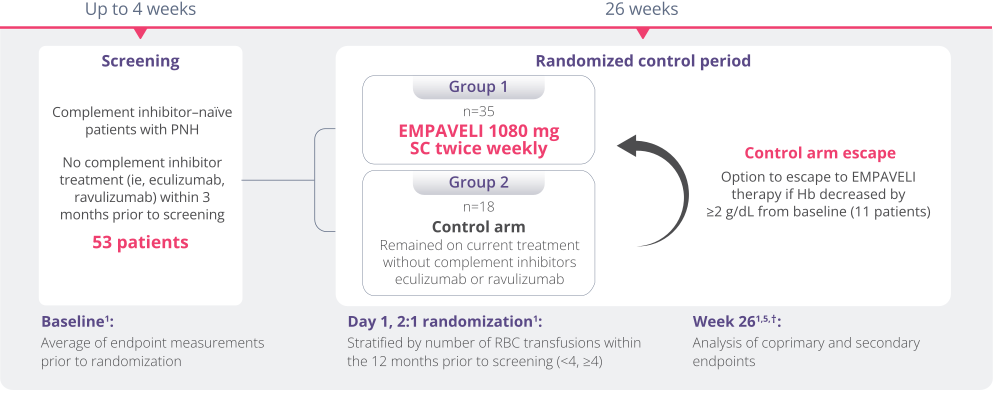
PRINCE was a randomized, 2:1, open-label, Phase 3 trial of 53 adult patients with PNH.1

PRINCE Study Design
Select inclusion criteria1,5
  • Adults ≥18 years of age with PNH treated with stable doses of medications/treatments, excluding complement inhibitors, for the previous 3 months
  • Hb level below LLN at screening
  • LDH level ≥1.5 x ULN at screening
Coprimary endpoints1,5
  • Hb stabilization at Week 26
  • Change from baseline in LDH levels at Week 26
Select secondary endpoints1,5
  • Transfusion avoidance
  • Normalization of Hb
  • Normalization of LDH
  • Safety analyses

All patients who completed the 26-week period were eligible to enroll in a separate long-term extension study.1,3

Hb stabilization was defined as avoidance of a >1 g/dL decrease in Hb levels from baseline in the absence of transfusions through Week 26.

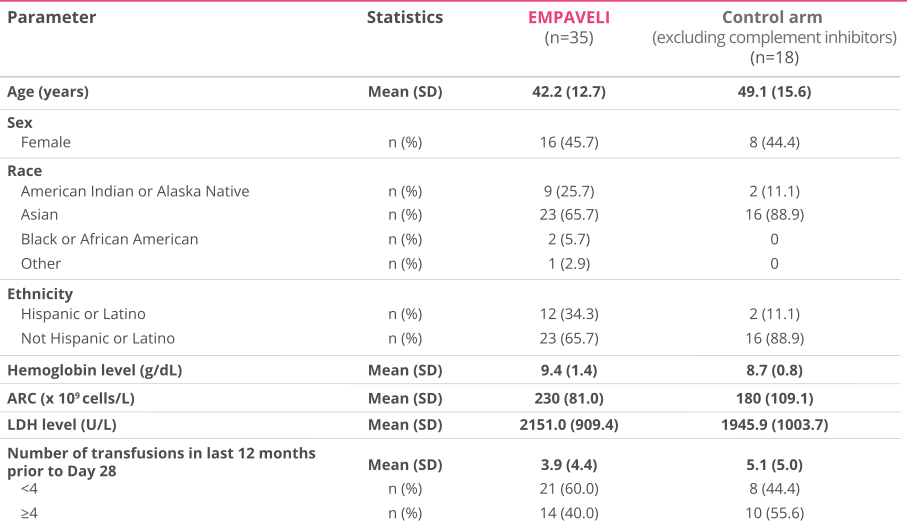
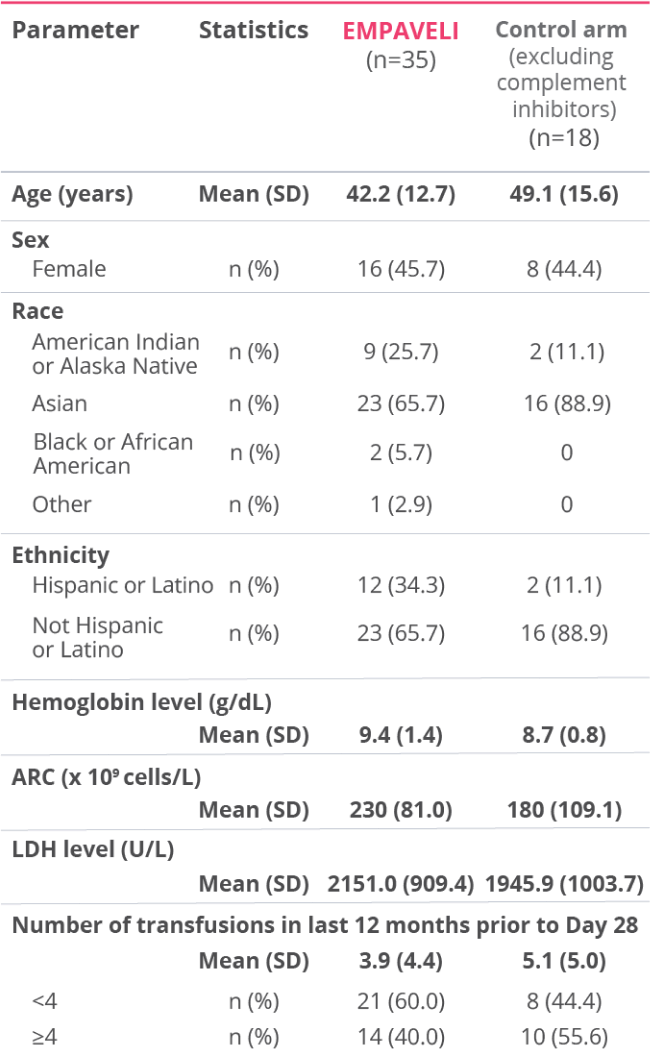
Patient baseline demographics and characteristics in PRINCE1

Long-term data (up to 3 years)6

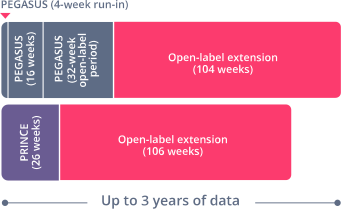
These data are from an integrated analysis of the EMPAVELI Phase 3 trials (PEGASUS, PRINCE) and subsequent open-label extension. Overall, 114 of the 133 patients in the Phase 3 trials enrolled in the extension study (PEGASUS [n=64], PRINCE [n=50]). Long-term data presented reflect the subset of patients who received 1080 mg of EMPAVELI by subcutaneous infusion twice weekly or every 3 days for up to 3 years (2.5 years, PRINCE; 3 years, PEGASUS).6

Long-term analysis study design3

Analysis evaluated6

  • Long-term efficacy
  • Long-term safety

Limitations6

  • Data from this post hoc, integrated analysis are descriptive in nature, collected for observation only
  • The analysis included a mixed patient population—C5i-experienced (PEGASUS) and complement inhibitor–naïve (PRINCE).
Findings may not represent all people with PNH
  • Baseline for those not originally assigned EMPAVELI in the trials was defined by when they started receiving EMPAVELI to
evaluate the long-term effectiveness and safety of treatment with EMPAVELI

Original inclusion criteria

  • From PEGASUS: baseline Hb <10.5 g/dL at screening despite ≥3 months of stable eculizumab dosing1
  • From PRINCE: naïve to complement inhibitors with Hb <LLN (13.6 g/dL for males, 12.0 g/dL for females) at screening1,4

Jillian is an adult with PNH who's taken EMPAVELI.

ARC=absolute reticulocyte count; C5i=C5 inhibitor; ecu=eculizumab; EMP=EMPAVELI; FACIT=Functional Assessment of Chronic Illness Therapy; Hb=hemoglobin; LDH=lactate dehydrogenase; LLN=lower limit of normal; OLP=open-label period; PNH=paroxysmal nocturnal hemoglobinuria; SC=subcutaneous; SD=standard deviation; ULN=upper limit of normal.

References: 1. EMPAVELI [prescribing information]. Waltham, MA: Apellis Pharmaceuticals, Inc.; 2025. 2. Heo YA. Pegcetacoplan: a review in paroxysmal nocturnal haemoglobinuria. Drugs. 2022;82(18):1727-1735. doi:10.1007/s40265-022-01809-w 3. Data on file. Apellis Pharmaceuticals, Inc., Waltham, MA. 4. Hillmen P, Szer J, Weitz I, et al. Pegcetacoplan versus eculizumab in paroxysmal nocturnal hemoglobinuria. N Engl J Med. 2021;384(11):1028-1037. doi:10.1056/NEJMoa2029073 5. Wong RSM, Navarro-Cabrera JR, Comia NS, et al. Pegcetacoplan controls hemolysis in complement inhibitor-naive patients with paroxysmal nocturnal hemoglobinuria. Blood Adv. 2023;7(11):2468-2478. doi:10.1182/bloodadvances.2022009129 6. de Castro C, Mulherin B, Patriquin CJ, et al. Efficacy and safety is maintained up to 3 years in adults with paroxysmal nocturnal hemoglobinuria receiving pegcetacoplan. Blood. 2023;142(suppl1):574-576.

IMPORTANT SAFETY INFORMATION

WARNING: SERIOUS INFECTIONS CAUSED BY ENCAPSULATED BACTERIA

EMPAVELI, a complement inhibitor, increases the risk of serious infections, especially those caused by encapsulated bacteria, such as Streptococcus pneumoniae, Neisseria meningitidis, and Haemophilus influenzae type B. Life-threatening and fatal infections with encapsulated bacteria have occurred in patients treated with complement inhibitors. These infections may become rapidly life-threatening or fatal if not recognized and treated early.

  • Complete or update vaccination for encapsulated bacteria at least 2 weeks prior to the first dose of EMPAVELI, unless the risks of delaying therapy with EMPAVELI outweigh the risks of developing a serious infection. Comply with the most current Advisory Committee on Immunization Practices (ACIP) recommendations for vaccinations against encapsulated bacteria in patients receiving a complement inhibitor.
  • Patients receiving EMPAVELI are at increased risk for invasive disease caused by encapsulated bacteria, even if they develop antibodies following vaccination. Monitor patients for early signs and symptoms of serious infections and evaluate immediately if infection is suspected.

Because of the risk of serious infections caused by encapsulated bacteria, EMPAVELI is available only through a restricted program under a Risk Evaluation and Mitigation Strategy (REMS) called the EMPAVELI REMS.

CONTRAINDICATIONS

  • Hypersensitivity to pegcetacoplan or to any of the excipients
  • For initiation in patients with unresolved serious infection caused by encapsulated bacteria including Streptococcus pneumoniae, Neisseria meningitidis, and Haemophilus influenzae type B

WARNINGS AND PRECAUTIONS

Serious Infections Caused by Encapsulated Bacteria

EMPAVELI, a complement inhibitor, increases a patient’s susceptibility to serious, life-threatening, or fatal infections caused by encapsulated bacteria including Streptococcus pneumoniae, Neisseria meningitidis (caused by any serogroup, including non-groupable strains), and Haemophilus influenzae type B. Life-threatening and fatal infections with encapsulated bacteria have occurred in both vaccinated and unvaccinated patients treated with complement inhibitors. The initiation of EMPAVELI treatment is contraindicated in patients with unresolved serious infection caused by encapsulated bacteria.

Complete or update vaccination against encapsulated bacteria at least 2 weeks prior to administration of the first dose of EMPAVELI, according to the most current ACIP recommendations for patients receiving a complement inhibitor. Revaccinate patients in accordance with ACIP recommendations considering the duration of therapy with EMPAVELI. Note that, ACIP recommends an administration schedule in patients receiving complement inhibitors that differs from the administration schedule in the vaccine prescribing information. If urgent EMPAVELI therapy is indicated in a patient who is not up to date with vaccines against encapsulated bacteria according to ACIP recommendations, provide the patient with antibacterial drug prophylaxis and administer these vaccines as soon as possible. The benefits and risks of treatment with EMPAVELI, as well as the benefits and risks of antibacterial drug prophylaxis in unvaccinated or vaccinated patients, must be considered against the known risks for serious infections caused by encapsulated bacteria.

Vaccination does not eliminate the risk of serious encapsulated bacterial infections, despite development of antibodies following vaccination. Closely monitor patients for early signs and symptoms of serious infection and evaluate patients immediately if an infection is suspected. Inform patients of these signs and symptoms and instruct patients to seek immediate medical care if these signs and symptoms occur. Promptly treat known infections. Serious infection may become rapidly life-threatening or fatal if not recognized and treated early. Consider interruption of EMPAVELI in patients who are undergoing treatment for serious infections.

EMPAVELI is available only through a restricted program under a REMS.

EMPAVELI REMS

EMPAVELI is available only through a restricted program under a REMS called EMPAVELI REMS, because of the risk of serious infections caused by encapsulated bacteria. Notable requirements of the EMPAVELI REMS include the following:

Under the EMPAVELI REMS, prescribers must enroll in the program. Prescribers must counsel patients about the risks, signs, and symptoms of serious infections caused by encapsulated bacteria, provide patients with the REMS educational materials, ensure patients are vaccinated against encapsulated bacteria at least 2 weeks prior to the first dose of EMPAVELI, prescribe antibacterial drug prophylaxis if patients’ vaccine status is not up to date and treatment must be started urgently, and provide instructions to always carry the Patient Safety Card both during treatment, as well as for 2 months following last dose of EMPAVELI. Pharmacies that dispense EMPAVELI must be certified in the EMPAVELI REMS and must verify prescribers are certified.

Further information is available at www.empavelirems.com or 1-888-343-7073.

Infusion-Related Reactions

Systemic hypersensitivity reactions (e.g., facial swelling, rash, urticaria, pyrexia) have occurred in patients treated with EMPAVELI, which may resolve after treatment with antihistamines. Cases of anaphylaxis leading to treatment discontinuation have been reported. If a severe hypersensitivity reaction (including anaphylaxis) occurs, discontinue EMPAVELI infusion immediately, institute appropriate treatment, per standard of care, and monitor until signs and symptoms are resolved.

Monitoring PNH Manifestations after Discontinuation of EMPAVELI

After discontinuing treatment with EMPAVELI, closely monitor for signs and symptoms of hemolysis, identified by elevated LDH levels along with sudden decrease in PNH clone size or hemoglobin, or reappearance of symptoms such as fatigue, hemoglobinuria, abdominal pain, dyspnea, major adverse vascular events (including thrombosis), dysphagia, or erectile dysfunction. Monitor any patient who discontinues EMPAVELI for at least 8 weeks to detect hemolysis and other reactions. If hemolysis, including elevated LDH, occurs after discontinuation of EMPAVELI, consider restarting treatment with EMPAVELI.

Interference with Laboratory Tests

There may be interference between silica reagents in coagulation panels and EMPAVELI that results in artificially prolonged activated partial thromboplastin time (aPTT); therefore, avoid the use of silica reagents in coagulation panels.

ADVERSE REACTIONS

Most common adverse reactions in patients with PNH (incidence ≥10%) were injection‑site reactions, infections, diarrhea, abdominal pain, respiratory tract infection, pain in extremity, hypokalemia, fatigue, viral infection, cough, arthralgia, dizziness, headache, and rash.

USE IN SPECIFIC POPULATIONS

Females of Reproductive Potential

EMPAVELI may cause embryo-fetal harm when administered to pregnant women. Pregnancy testing is recommended for females of reproductive potential prior to treatment with EMPAVELI. Advise female patients of reproductive potential to use effective contraception during treatment with EMPAVELI and for 40 days after the last dose.

INDICATION

EMPAVELI® (pegcetacoplan) is indicated for the treatment of adult patients with paroxysmal nocturnal hemoglobinuria (PNH).

Please see full Prescribing Information, including Boxed WARNING regarding serious infections caused by encapsulated bacteria, and Medication Guide.


  • EXPAND
  • COLLAPSE

IMPORTANT SAFETY INFORMATION

WARNING: SERIOUS INFECTIONS CAUSED BY ENCAPSULATED BACTERIA

EMPAVELI, a complement inhibitor, increases the risk of serious infections, especially those caused by encapsulated bacteria, such as Streptococcus pneumoniae, Neisseria meningitidis, and Haemophilus influenzae type B. Life-threatening and fatal infections with encapsulated bacteria have occurred in patients treated with complement inhibitors. These infections may become rapidly life-threatening or fatal if not recognized and treated early.

  • Complete or update vaccination for encapsulated bacteria at least 2 weeks prior to the first dose of EMPAVELI, unless the risks of delaying therapy with EMPAVELI outweigh the risks of developing a serious infection. Comply with the most current Advisory Committee on Immunization Practices (ACIP) recommendations for vaccinations against encapsulated bacteria in patients receiving a complement inhibitor.
  • Patients receiving EMPAVELI are at increased risk for invasive disease caused by encapsulated bacteria, even if they develop antibodies following vaccination. Monitor patients for early signs and symptoms of serious infections and evaluate immediately if infection is suspected.

Because of the risk of serious infections caused by encapsulated bacteria, EMPAVELI is available only through a restricted program under a Risk Evaluation and Mitigation Strategy (REMS) called the EMPAVELI REMS.

CONTRAINDICATIONS

  • Hypersensitivity to pegcetacoplan or to any of the excipients
  • For initiation in patients with unresolved serious infection caused by encapsulated bacteria including Streptococcus pneumoniae, Neisseria meningitidis, and Haemophilus influenzae type B

WARNINGS AND PRECAUTIONS

Serious Infections Caused by Encapsulated Bacteria

EMPAVELI, a complement inhibitor, increases a patient’s susceptibility to serious, life-threatening, or fatal infections caused by encapsulated bacteria including Streptococcus pneumoniae, Neisseria meningitidis (caused by any serogroup, including non-groupable strains), and Haemophilus influenzae type B. Life-threatening and fatal infections with encapsulated bacteria have occurred in both vaccinated and unvaccinated patients treated with complement inhibitors. The initiation of EMPAVELI treatment is contraindicated in patients with unresolved serious infection caused by encapsulated bacteria.

Complete or update vaccination against encapsulated bacteria at least 2 weeks prior to administration of the first dose of EMPAVELI, according to the most current ACIP recommendations for patients receiving a complement inhibitor. Revaccinate patients in accordance with ACIP recommendations considering the duration of therapy with EMPAVELI. Note that, ACIP recommends an administration schedule in patients receiving complement inhibitors that differs from the administration schedule in the vaccine prescribing information. If urgent EMPAVELI therapy is indicated in a patient who is not up to date with vaccines against encapsulated bacteria according to ACIP recommendations, provide the patient with antibacterial drug prophylaxis and administer these vaccines as soon as possible. The benefits and risks of treatment with EMPAVELI, as well as the benefits and risks of antibacterial drug prophylaxis in unvaccinated or vaccinated patients, must be considered against the known risks for serious infections caused by encapsulated bacteria.

Vaccination does not eliminate the risk of serious encapsulated bacterial infections, despite development of antibodies following vaccination. Closely monitor patients for early signs and symptoms of serious infection and evaluate patients immediately if an infection is suspected. Inform patients of these signs and symptoms and instruct patients to seek immediate medical care if these signs and symptoms occur. Promptly treat known infections. Serious infection may become rapidly life-threatening or fatal if not recognized and treated early. Consider interruption of EMPAVELI in patients who are undergoing treatment for serious infections.

EMPAVELI is available only through a restricted program under a REMS.

EMPAVELI REMS

EMPAVELI is available only through a restricted program under a REMS called EMPAVELI REMS, because of the risk of serious infections caused by encapsulated bacteria. Notable requirements of the EMPAVELI REMS include the following:

Under the EMPAVELI REMS, prescribers must enroll in the program. Prescribers must counsel patients about the risks, signs, and symptoms of serious infections caused by encapsulated bacteria, provide patients with the REMS educational materials, ensure patients are vaccinated against encapsulated bacteria at least 2 weeks prior to the first dose of EMPAVELI, prescribe antibacterial drug prophylaxis if patients’ vaccine status is not up to date and treatment must be started urgently, and provide instructions to always carry the Patient Safety Card both during treatment, as well as for 2 months following last dose of EMPAVELI. Pharmacies that dispense EMPAVELI must be certified in the EMPAVELI REMS and must verify prescribers are certified.

Further information is available at www.empavelirems.com or 1-888-343-7073.

Infusion-Related Reactions

Systemic hypersensitivity reactions (e.g., facial swelling, rash, urticaria, pyrexia) have occurred in patients treated with EMPAVELI, which may resolve after treatment with antihistamines. Cases of anaphylaxis leading to treatment discontinuation have been reported. If a severe hypersensitivity reaction (including anaphylaxis) occurs, discontinue EMPAVELI infusion immediately, institute appropriate treatment, per standard of care, and monitor until signs and symptoms are resolved.

Monitoring PNH Manifestations after Discontinuation of EMPAVELI

After discontinuing treatment with EMPAVELI, closely monitor for signs and symptoms of hemolysis, identified by elevated LDH levels along with sudden decrease in PNH clone size or hemoglobin, or reappearance of symptoms such as fatigue, hemoglobinuria, abdominal pain, dyspnea, major adverse vascular events (including thrombosis), dysphagia, or erectile dysfunction. Monitor any patient who discontinues EMPAVELI for at least 8 weeks to detect hemolysis and other reactions. If hemolysis, including elevated LDH, occurs after discontinuation of EMPAVELI, consider restarting treatment with EMPAVELI.

Interference with Laboratory Tests

There may be interference between silica reagents in coagulation panels and EMPAVELI that results in artificially prolonged activated partial thromboplastin time (aPTT); therefore, avoid the use of silica reagents in coagulation panels.

ADVERSE REACTIONS

Most common adverse reactions in patients with PNH (incidence ≥10%) were injection‑site reactions, infections, diarrhea, abdominal pain, respiratory tract infection, pain in extremity, hypokalemia, fatigue, viral infection, cough, arthralgia, dizziness, headache, and rash.

USE IN SPECIFIC POPULATIONS

Females of Reproductive Potential

EMPAVELI may cause embryo-fetal harm when administered to pregnant women. Pregnancy testing is recommended for females of reproductive potential prior to treatment with EMPAVELI. Advise female patients of reproductive potential to use effective contraception during treatment with EMPAVELI and for 40 days after the last dose.

INDICATION

EMPAVELI® (pegcetacoplan) is indicated for the treatment of adult patients with paroxysmal nocturnal hemoglobinuria (PNH).

Please see full Prescribing Information, including Boxed WARNING regarding serious infections caused by encapsulated bacteria, and Medication Guide.