Real-world patients, real-world results

ADELPHI study
OPERA study
Trial design
Study results

EMPAVELI patients were observed through survey results in an international, real-world study1


The study collected results for 61 patients with PNH, provided by 14 physicians, taking EMPAVELI for at least 1 month, through the Adelphi Real World PNH Disease Specific Programme (DSP)™. The DSP collected various data, including changes in Hb levels, LDH levels, and FACIT-Fatigue score.1

  • The PNH DSP was a non-interventional, cross-sectional, real-world survey with retrospective data collection, conducted in routine clinical practice. Eligible physicians (hematologist-oncologists or oncologists with at least 1 patient with PNH each month) completed electronic patient record forms for eligible PNH patients, and those patients were invited to independently and voluntarily complete forms. Other data sources included clinical records and physician diagnostic observations1

Study limitations1

Study limitations1

  • Participating patients may not reflect the general PNH population
  • DSP sampling was pseudo-random, but physician participation depended on willingness to complete the survey
  • Missing, inconsistent, or clearly incorrect (eg, outside possible range) data were excluded, but no source data verification was performed
  • Small sample sizes due to the rarity of PNH and recent EMPAVELI approval, but as analyses were descriptive with no statistical comparisons, this limitation is less critical
  • Only physician-reported outcomes were available at EMPAVELI initiation, limiting assessment of patient-reported fatigue, HRQoL, and productivity changes post-treatment

Patient population (n=61)1

Patient population (n=61)1

  • Mean age of 37.1 years (range: 19.0-69.0)
  • 59% male
  • Diagnosed with PNH 9 months to 18 years prior
  • Well-controlled or very well-controlled PNH at data collection
  • >90% were C5 inhibitor (C5i)-switch patients, 2 were C5i-naïve but had received non-complement therapy,* and 2 were treatment naïve

EMPAVELI experience1

EMPAVELI experience1

  • Received for 1.3 months to 14.8 months
  • Received 1080 mg per dose
  • 98% received 2x weekly
  • Almost 70% self-administered

*One patient was on a steroid and one patient was on an anticoagulant.1

Real-world results in patients with PNH treated with EMPAVELI


The following data are from the observational ADELPHI study. The analysis is descriptive, and the study design does not allow for the inference of causal relationships.

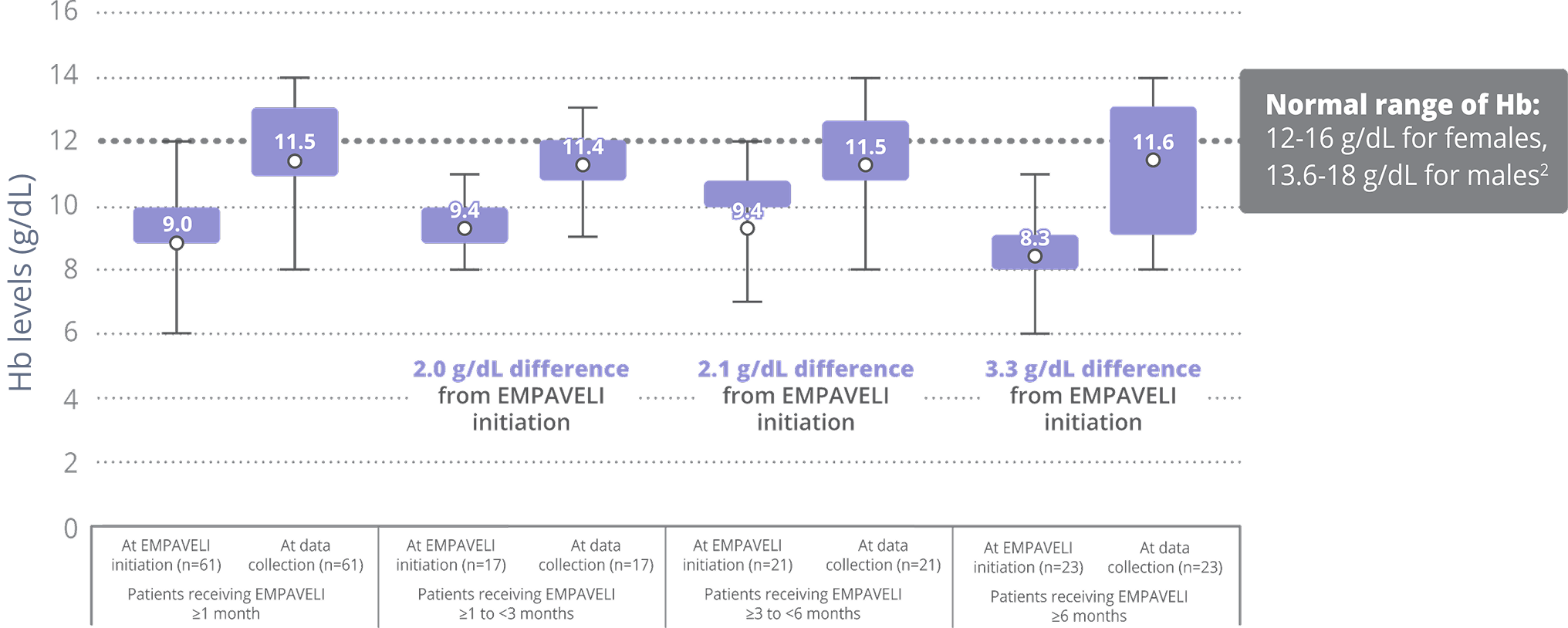
Hb levels1

Mean Hb levels were
11.5 g/dL
after treatment with EMPAVELI
VS
9.0 g/dL
at treatment initiation

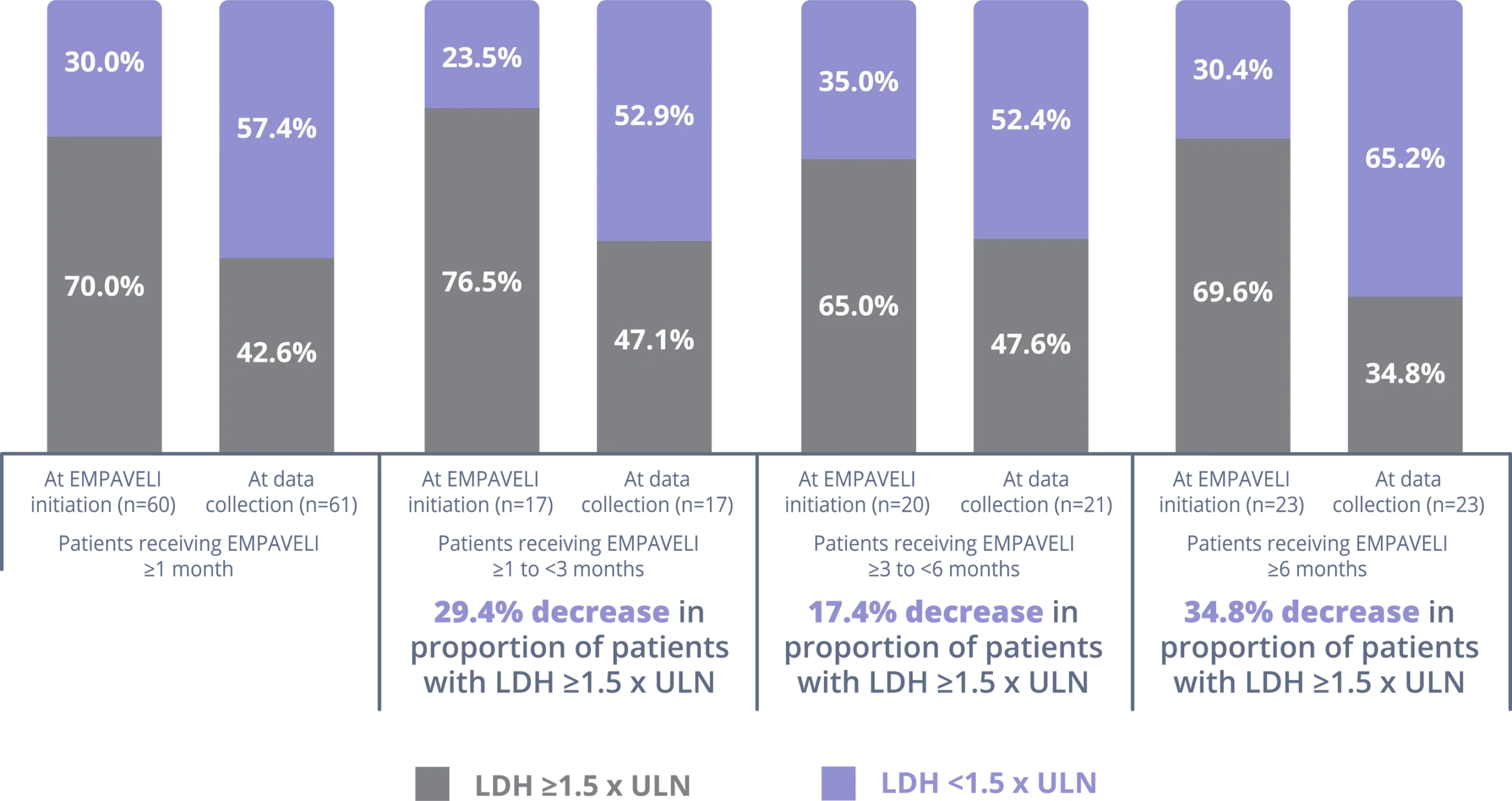
LDH levels1

Proportion of patients with LDH ≥1.5 x ULN1
70.0%
at initiation
VS
42.6%
after ≥1 month of EMPAVELI

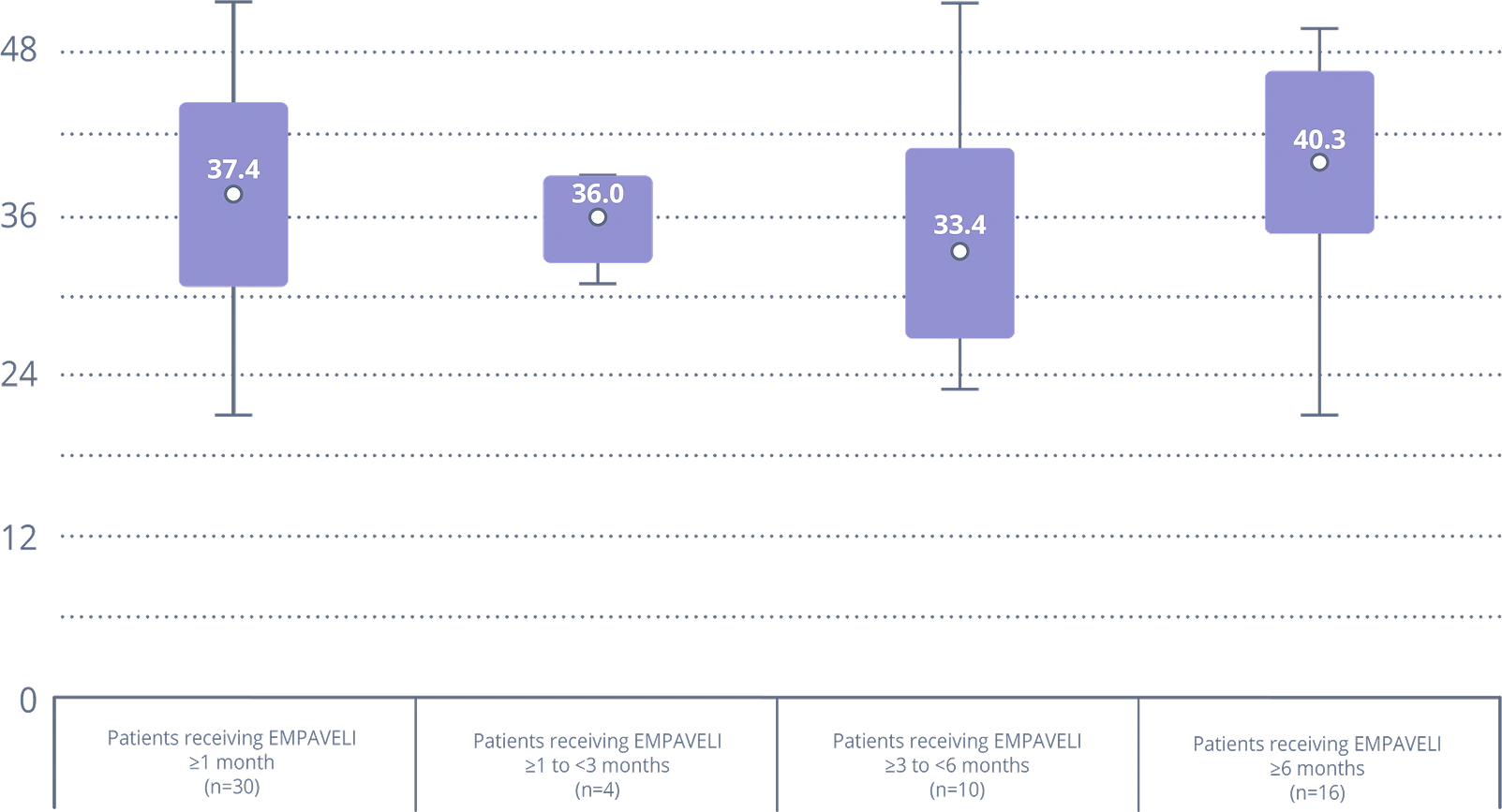
FACIT-Fatigue1

Physicians perceived ~80% of patients to have moderate or
severe fatigue prior to EMPAVELI treatment1

While >80% were perceived to have no fatigue or mild fatigue at data collection,

none were perceived to have severe fatigue after EMPAVELI1

FACIT-Fatigue total score1

Trial design
Study results

Patients taking EMPAVELI were examined in the first US longitudinal real-world study on C3 inhibitor therapy3


OPERA was a prospective, observational, real-world study of 70 patients with PNH taking EMPAVELI for up to 9 months, with results gathered through electronic patient-reported outcomes (ePROs). OPERA was a nationally representative and centrally recruited opt-in study. Data collected included changes in Hb levels and FACIT-Fatigue score.3

  • Observing international guidelines and epidemiologic guidance from the FDA, eligible patients were identified as taking EMPAVELI through the PANTHERx Rare specialty pharmacy, recruited, and opted-in to the study. There was no formal
    sample size required3

Study limitations3

Study limitations3

  • Sample sizes varied by treatment duration and declined in later follow-up periods
  • Findings were subject to bias inherent to self-reported outcomes, including item nonresponse, entry errors, and eligibility criteria
  • Hb values were self-reported only when obtained during routine care and were not collected at predetermined intervals
  • Convenience sampling based on physician discretion limited the generalizability of the findings
  • Adverse events may be underreported due to reliance on refill calls and patient spontaneous reports; some medical data (eg, transfusions) were not captured
  • ePRO methods provide valuable, real-world longitudinal evidence with minimal investigational interference

Patient population (n=70)3

Patient population (n=70)3

  • Mean age: 44.6 years
  • 57.1% female
  • Prior to baseline (within 12 months), 55.7% required transfusions
  • 93% were previously treated with C5is

EMPAVELI experience3

EMPAVELI experience3

  • Received 1080 mg subcutaneous dose twice weekly or every 3 days
  • 100% established treatment compliance through sufficient refill requests over 357.0 patient months

Real-world results in patients with PNH treated with EMPAVELI


The following data is from the observational OPERA study. The analysis is descriptive, and the study design does not allow for the inference of causal relationships.

Hb levels3

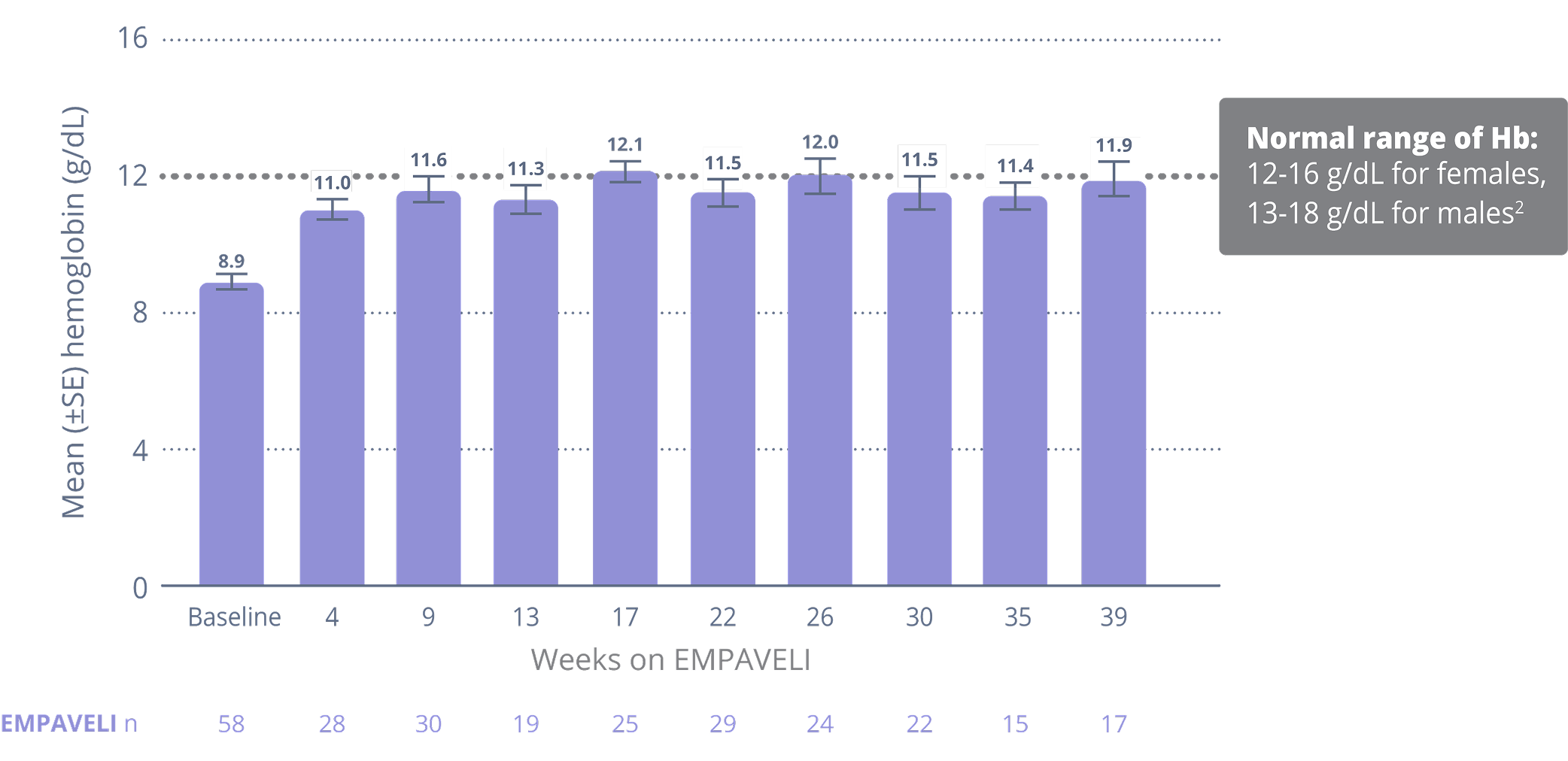
After censoring for transfusions, 58 patients with a mean baseline Hb level of 8.9 g/dL were observed in this analysis. The median follow-up period was 6.6 months. There were no reports of breakthrough hemolysis in these patients during the course of the analysis.

Mean Hb levels at follow-up were
11.5 g/dL
after treatment with EMPAVELI
VS
8.9 g/dL
at treatment initiation
2.6 g/dL change from baseline

Subgroup analysis of average hemoglobin levels by treatment duration3

Adapted from Mulherin B, Shenoy A, Arnett L, et al. Real-world study of US adults with paroxysmal nocturnal hemoglobinuria treated with pegcetacoplan. Hematol Rep. 2024;16(4):669-681.

FACIT-Fatigue

Change in FACIT-Fatigue scores3

Mean score at baseline (n=32): 28.4
Mean score at 3 months with EMPAVELI (n=29) 38.6
69% (n=20/29) reported ≥5 points change from baseline
Mean score at 6 months with EMPAVELI (n=20) 36.3
60% (n=12/20) reported ≥5 points change from baseline
Mean score at 9 months with EMPAVELI (n=15) 34.9
53.3% (n=8/15) reported ≥5 points change from baseline
≥30% of patients achieved FACIT-Fatigue scores

equal to the general population3

© 2024 by the authors. Licensee MDPI, Basel, Switzerland. This article is an open access article distributed under the terms and conditions of the Creative Commons Attribution (CC BY) license (https://creativecommons.org/licenses/by/4.0/).

Angelo is an adult with
PNH who's taken EMPAVELI.

C5i=C5 inhibitor; FACIT=Functional Assessment of Chronic Illness Therapy; Hb=hemoglobin; HRQoL=health-related quality of life; LDH=lactate dehydrogenase; OPERA=Exploratory Outcomes Study in Paroxysmal Nocturnal Hemoglobinuria Using EMPAVELI®, a Real-World Analysis; PNH=paroxysmal nocturnal hemoglobinuria; SE=standard error; ULN=upper limit of normal.

References: 1. Wilson K, Rich C, Hakimi Z, et al. Pegcetacoplan in paroxysmal nocturnal haemoglobinuria: Its use, its clinical effectiveness, and its influence on health-related quality of life and productivity. Eur J Haematol. 2024;112(4):516-529. doi:10.1111/ejh.14139 2. Hillmen P, Szer J, Weitz I, et al. Pegcetacoplan versus eculizumab in paroxysmal nocturnal hemoglobinuria. N Engl J Med. 2021;384(11):1028-1037. doi:10.1056/NEJMoa2029073
3. Mulherin B, Shenoy A, Arnett L, et al. Real-world study of US adults with paroxysmal nocturnal hemoglobinuria treated with pegcetacoplan. Hematol Rep. 2024;16(4):669-681. doi:10.3390/hematolrep16040065

IMPORTANT SAFETY INFORMATION

WARNING: SERIOUS INFECTIONS CAUSED BY ENCAPSULATED BACTERIA

EMPAVELI, a complement inhibitor, increases the risk of serious infections, especially those caused by encapsulated bacteria, such as Streptococcus pneumoniae, Neisseria meningitidis, and Haemophilus influenzae type B. Life-threatening and fatal infections with encapsulated bacteria have occurred in patients treated with complement inhibitors. These infections may become rapidly life-threatening or fatal if not recognized and treated early.

  • Complete or update vaccination for encapsulated bacteria at least 2 weeks prior to the first dose of EMPAVELI, unless the risks of delaying therapy with EMPAVELI outweigh the risks of developing a serious infection. Comply with the most current Advisory Committee on Immunization Practices (ACIP) recommendations for vaccinations against encapsulated bacteria in patients receiving a complement inhibitor.
  • Patients receiving EMPAVELI are at increased risk for invasive disease caused by encapsulated bacteria, even if they develop antibodies following vaccination. Monitor patients for early signs and symptoms of serious infections and evaluate immediately if infection is suspected.

Because of the risk of serious infections caused by encapsulated bacteria, EMPAVELI is available only through a restricted program under a Risk Evaluation and Mitigation Strategy (REMS) called the EMPAVELI REMS.

CONTRAINDICATIONS

  • Hypersensitivity to pegcetacoplan or to any of the excipients
  • For initiation in patients with unresolved serious infection caused by encapsulated bacteria including Streptococcus pneumoniae, Neisseria meningitidis, and Haemophilus influenzae type B

WARNINGS AND PRECAUTIONS

Serious Infections Caused by Encapsulated Bacteria

EMPAVELI, a complement inhibitor, increases a patient’s susceptibility to serious, life-threatening, or fatal infections caused by encapsulated bacteria including Streptococcus pneumoniae, Neisseria meningitidis (caused by any serogroup, including non-groupable strains), and Haemophilus influenzae type B. Life-threatening and fatal infections with encapsulated bacteria have occurred in both vaccinated and unvaccinated patients treated with complement inhibitors. The initiation of EMPAVELI treatment is contraindicated in patients with unresolved serious infection caused by encapsulated bacteria.

Complete or update vaccination against encapsulated bacteria at least 2 weeks prior to administration of the first dose of EMPAVELI, according to the most current ACIP recommendations for patients receiving a complement inhibitor. Revaccinate patients in accordance with ACIP recommendations considering the duration of therapy with EMPAVELI. Note that, ACIP recommends an administration schedule in patients receiving complement inhibitors that differs from the administration schedule in the vaccine prescribing information. If urgent EMPAVELI therapy is indicated in a patient who is not up to date with vaccines against encapsulated bacteria according to ACIP recommendations, provide the patient with antibacterial drug prophylaxis and administer these vaccines as soon as possible. The benefits and risks of treatment with EMPAVELI, as well as the benefits and risks of antibacterial drug prophylaxis in unvaccinated or vaccinated patients, must be considered against the known risks for serious infections caused by encapsulated bacteria.

Vaccination does not eliminate the risk of serious encapsulated bacterial infections, despite development of antibodies following vaccination. Closely monitor patients for early signs and symptoms of serious infection and evaluate patients immediately if an infection is suspected. Inform patients of these signs and symptoms and instruct patients to seek immediate medical care if these signs and symptoms occur. Promptly treat known infections. Serious infection may become rapidly life-threatening or fatal if not recognized and treated early. Consider interruption of EMPAVELI in patients who are undergoing treatment for serious infections.

EMPAVELI is available only through a restricted program under a REMS.

EMPAVELI REMS

EMPAVELI is available only through a restricted program under a REMS called EMPAVELI REMS, because of the risk of serious infections caused by encapsulated bacteria. Notable requirements of the EMPAVELI REMS include the following:

Under the EMPAVELI REMS, prescribers must enroll in the program. Prescribers must counsel patients about the risks, signs, and symptoms of serious infections caused by encapsulated bacteria, provide patients with the REMS educational materials, ensure patients are vaccinated against encapsulated bacteria at least 2 weeks prior to the first dose of EMPAVELI, prescribe antibacterial drug prophylaxis if patients’ vaccine status is not up to date and treatment must be started urgently, and provide instructions to always carry the Patient Safety Card both during treatment, as well as for 2 months following last dose of EMPAVELI. Pharmacies that dispense EMPAVELI must be certified in the EMPAVELI REMS and must verify prescribers are certified.

Further information is available at www.empavelirems.com or 1-888-343-7073.

Infusion-Related Reactions

Systemic hypersensitivity reactions (e.g., facial swelling, rash, urticaria, pyrexia) have occurred in patients treated with EMPAVELI, which may resolve after treatment with antihistamines. Cases of anaphylaxis leading to treatment discontinuation have been reported. If a severe hypersensitivity reaction (including anaphylaxis) occurs, discontinue EMPAVELI infusion immediately, institute appropriate treatment, per standard of care, and monitor until signs and symptoms are resolved.

Monitoring PNH Manifestations after Discontinuation of EMPAVELI

After discontinuing treatment with EMPAVELI, closely monitor for signs and symptoms of hemolysis, identified by elevated LDH levels along with sudden decrease in PNH clone size or hemoglobin, or reappearance of symptoms such as fatigue, hemoglobinuria, abdominal pain, dyspnea, major adverse vascular events (including thrombosis), dysphagia, or erectile dysfunction. Monitor any patient who discontinues EMPAVELI for at least 8 weeks to detect hemolysis and other reactions. If hemolysis, including elevated LDH, occurs after discontinuation of EMPAVELI, consider restarting treatment with EMPAVELI.

Interference with Laboratory Tests

There may be interference between silica reagents in coagulation panels and EMPAVELI that results in artificially prolonged activated partial thromboplastin time (aPTT); therefore, avoid the use of silica reagents in coagulation panels.

ADVERSE REACTIONS

Most common adverse reactions in patients with PNH (incidence ≥10%) were injection‑site reactions, infections, diarrhea, abdominal pain, respiratory tract infection, pain in extremity, hypokalemia, fatigue, viral infection, cough, arthralgia, dizziness, headache, and rash.

USE IN SPECIFIC POPULATIONS

Females of Reproductive Potential

EMPAVELI may cause embryo-fetal harm when administered to pregnant women. Pregnancy testing is recommended for females of reproductive potential prior to treatment with EMPAVELI. Advise female patients of reproductive potential to use effective contraception during treatment with EMPAVELI and for 40 days after the last dose.

INDICATION

EMPAVELI® (pegcetacoplan) is indicated for the treatment of adult patients with paroxysmal nocturnal hemoglobinuria (PNH).

Please see full Prescribing Information, including Boxed WARNING regarding serious infections caused by encapsulated bacteria, and Medication Guide.


  • EXPAND
  • COLLAPSE

IMPORTANT SAFETY INFORMATION

WARNING: SERIOUS INFECTIONS CAUSED BY ENCAPSULATED BACTERIA

EMPAVELI, a complement inhibitor, increases the risk of serious infections, especially those caused by encapsulated bacteria, such as Streptococcus pneumoniae, Neisseria meningitidis, and Haemophilus influenzae type B. Life-threatening and fatal infections with encapsulated bacteria have occurred in patients treated with complement inhibitors. These infections may become rapidly life-threatening or fatal if not recognized and treated early.

  • Complete or update vaccination for encapsulated bacteria at least 2 weeks prior to the first dose of EMPAVELI, unless the risks of delaying therapy with EMPAVELI outweigh the risks of developing a serious infection. Comply with the most current Advisory Committee on Immunization Practices (ACIP) recommendations for vaccinations against encapsulated bacteria in patients receiving a complement inhibitor.
  • Patients receiving EMPAVELI are at increased risk for invasive disease caused by encapsulated bacteria, even if they develop antibodies following vaccination. Monitor patients for early signs and symptoms of serious infections and evaluate immediately if infection is suspected.

Because of the risk of serious infections caused by encapsulated bacteria, EMPAVELI is available only through a restricted program under a Risk Evaluation and Mitigation Strategy (REMS) called the EMPAVELI REMS.

CONTRAINDICATIONS

  • Hypersensitivity to pegcetacoplan or to any of the excipients
  • For initiation in patients with unresolved serious infection caused by encapsulated bacteria including Streptococcus pneumoniae, Neisseria meningitidis, and Haemophilus influenzae type B

WARNINGS AND PRECAUTIONS

Serious Infections Caused by Encapsulated Bacteria

EMPAVELI, a complement inhibitor, increases a patient’s susceptibility to serious, life-threatening, or fatal infections caused by encapsulated bacteria including Streptococcus pneumoniae, Neisseria meningitidis (caused by any serogroup, including non-groupable strains), and Haemophilus influenzae type B. Life-threatening and fatal infections with encapsulated bacteria have occurred in both vaccinated and unvaccinated patients treated with complement inhibitors. The initiation of EMPAVELI treatment is contraindicated in patients with unresolved serious infection caused by encapsulated bacteria.

Complete or update vaccination against encapsulated bacteria at least 2 weeks prior to administration of the first dose of EMPAVELI, according to the most current ACIP recommendations for patients receiving a complement inhibitor. Revaccinate patients in accordance with ACIP recommendations considering the duration of therapy with EMPAVELI. Note that, ACIP recommends an administration schedule in patients receiving complement inhibitors that differs from the administration schedule in the vaccine prescribing information. If urgent EMPAVELI therapy is indicated in a patient who is not up to date with vaccines against encapsulated bacteria according to ACIP recommendations, provide the patient with antibacterial drug prophylaxis and administer these vaccines as soon as possible. The benefits and risks of treatment with EMPAVELI, as well as the benefits and risks of antibacterial drug prophylaxis in unvaccinated or vaccinated patients, must be considered against the known risks for serious infections caused by encapsulated bacteria.

Vaccination does not eliminate the risk of serious encapsulated bacterial infections, despite development of antibodies following vaccination. Closely monitor patients for early signs and symptoms of serious infection and evaluate patients immediately if an infection is suspected. Inform patients of these signs and symptoms and instruct patients to seek immediate medical care if these signs and symptoms occur. Promptly treat known infections. Serious infection may become rapidly life-threatening or fatal if not recognized and treated early. Consider interruption of EMPAVELI in patients who are undergoing treatment for serious infections.

EMPAVELI is available only through a restricted program under a REMS.

EMPAVELI REMS

EMPAVELI is available only through a restricted program under a REMS called EMPAVELI REMS, because of the risk of serious infections caused by encapsulated bacteria. Notable requirements of the EMPAVELI REMS include the following:

Under the EMPAVELI REMS, prescribers must enroll in the program. Prescribers must counsel patients about the risks, signs, and symptoms of serious infections caused by encapsulated bacteria, provide patients with the REMS educational materials, ensure patients are vaccinated against encapsulated bacteria at least 2 weeks prior to the first dose of EMPAVELI, prescribe antibacterial drug prophylaxis if patients’ vaccine status is not up to date and treatment must be started urgently, and provide instructions to always carry the Patient Safety Card both during treatment, as well as for 2 months following last dose of EMPAVELI. Pharmacies that dispense EMPAVELI must be certified in the EMPAVELI REMS and must verify prescribers are certified.

Further information is available at www.empavelirems.com or 1-888-343-7073.

Infusion-Related Reactions

Systemic hypersensitivity reactions (e.g., facial swelling, rash, urticaria, pyrexia) have occurred in patients treated with EMPAVELI, which may resolve after treatment with antihistamines. Cases of anaphylaxis leading to treatment discontinuation have been reported. If a severe hypersensitivity reaction (including anaphylaxis) occurs, discontinue EMPAVELI infusion immediately, institute appropriate treatment, per standard of care, and monitor until signs and symptoms are resolved.

Monitoring PNH Manifestations after Discontinuation of EMPAVELI

After discontinuing treatment with EMPAVELI, closely monitor for signs and symptoms of hemolysis, identified by elevated LDH levels along with sudden decrease in PNH clone size or hemoglobin, or reappearance of symptoms such as fatigue, hemoglobinuria, abdominal pain, dyspnea, major adverse vascular events (including thrombosis), dysphagia, or erectile dysfunction. Monitor any patient who discontinues EMPAVELI for at least 8 weeks to detect hemolysis and other reactions. If hemolysis, including elevated LDH, occurs after discontinuation of EMPAVELI, consider restarting treatment with EMPAVELI.

Interference with Laboratory Tests

There may be interference between silica reagents in coagulation panels and EMPAVELI that results in artificially prolonged activated partial thromboplastin time (aPTT); therefore, avoid the use of silica reagents in coagulation panels.

ADVERSE REACTIONS

Most common adverse reactions in patients with PNH (incidence ≥10%) were injection‑site reactions, infections, diarrhea, abdominal pain, respiratory tract infection, pain in extremity, hypokalemia, fatigue, viral infection, cough, arthralgia, dizziness, headache, and rash.

USE IN SPECIFIC POPULATIONS

Females of Reproductive Potential

EMPAVELI may cause embryo-fetal harm when administered to pregnant women. Pregnancy testing is recommended for females of reproductive potential prior to treatment with EMPAVELI. Advise female patients of reproductive potential to use effective contraception during treatment with EMPAVELI and for 40 days after the last dose.

INDICATION

EMPAVELI® (pegcetacoplan) is indicated for the treatment of adult patients with paroxysmal nocturnal hemoglobinuria (PNH).

Please see full Prescribing Information, including Boxed WARNING regarding serious infections caused by encapsulated bacteria, and Medication Guide.